Why Safety Is the Smartest Investment
The industrial workplace presents a range of potential hazards that can impact the health, safety, and productivity of a workforce. A significant portion of industrial accidents happen during material handling. In fact, 1 in 4 industrial accidents occur on the loading dock, making it one of the most dangerous areas in a facility. When operations are interrupted due to injuries or unsafe conditions, the entire business feels the effect. That’s why prioritizing loading dock and warehouse safety is essential to long-term success.
Investing in the right safety solutions leads to less downtime, fewer injuries, and reduced insurance costs. A safer, more efficient working environment not only protects people — it strengthens the bottom line. In short, safeguarding your team is one of the smartest financial decisions any operation can make.
Read on to explore how smart safety upgrades can drive performance, limit liability, and deliver lasting value across the board.
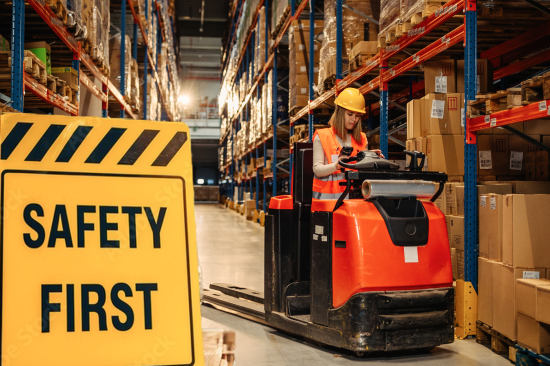
The Scope of the Problem
Loading dock injuries are all too common in the manufacturing sector. According to industry sources, approximately 1 in 4 industrial or workplace accidents occur at loading docks across both the United States and Canada — and among those incidents, an estimated 7,700 involve forklifts at U.S. loading docks each year, averaging about 21 forklift accidents per day. For every reported incident, there are also an estimated 600 near misses. Put simply, it pays to play it safe on the job.
Safety in numbers:
- Average forklift fall-through costs ~$191,000 (medical + equipment + repair)
- Serious warehouse injuries cost ~$48,000; average direct cost ~$40,000 per injury
- NSC: average direct cost per injury is $40-43K; indirect costs often triple–quintuple that figure
- Average workers’ comp claim: ~$41,757; falls/slips around $49,971
- Loading-dock-related comp for injuries: $9.72 B annually (based on 2017 data, the most current available)
Business Impacts Beyond Injuries
Along with injury prevention, loading dock and warehouse safety helps mitigate a number of occupational risks. Failure to invest in workplace protection carries business impacts far beyond injuries. Here’s a closer look at why safety is the smartest investment.
The True Cost of Unsafe Docks
- Downtime: On average, 7–8 workdays are lost per injury, with slips and falls causing up to 25 days off work.
- Hidden costs: Some of the hidden costs associated with unsafe industrial environments include equipment damage, product spoilage, and retraining ,scheduling disruptions and replacement staffing.
- Fines and penalties: OSHA takes workplace safety seriously, and violations can come with steep financial consequences. Fines can range from $10,000 to over $70,000 per incident, depending on the severity and whether the violation is deemed willful or repeated.
- Insurance Premium Impact: Even a single incident can raise your Experience Modification Rate (EMR), directly increasing workers' compensation insurance premiums. Higher EMRs translate to long-term increases in overhead and lost competitiveness when bidding for contracts.
- Workers’ Compensation & Legal Exposure: Aside from the real human cost, companies may face substantial workers’ compensation claims and, in some cases, legal action. These outcomes can result in court fees, settlements, and a long-term impact on employee morale and company culture.
Safety Upgrades that Deliver ROI
Vehicle Restraints (Wheel Chocks / Auto restraints)
Vehicle restraints like wheel chocks and automated restraints help prevent trailer creep and forklift falls to deliver a significant Return on Investment (ROI). For example, a $191K accident avoided by automated restraints pays for itself.
ROI Highlight: Enhance dock safety and efficiency to help reduce serious accidents and injuries. This results in lower insurance premiums, damage to equipment and/or product loads and fewer workers compensation claims.
Dock Barriers, Gates & Bollards
Prevent equipment damage and injuries by stopping collisions before they happen. Protective systems such as dock barriers, gates, bollards, and dock lip barriers are essential for redirecting or halting vehicle motion (especially forklifts) before they reach dangerous drop-offs or pedestrian zones.
One of the most common, and preventable, types of injuries on loading docks is falls, both by pedestrians and forklift operators. Many warehouses rely on minimal protection, such as a simple chain across an open dock door. However, a 13,000-pound forklift can easily break through this kind of barrier, and workers can trip over it, leading to serious injuries. According to OSHA standard 29 CFR 1910.23(b), any wall opening with a drop of more than 4 feet must be guarded by a secure fall protection barrier, not just a chain. Ensuring compliance with this standard is critical for safety and liability.
Dock lip barriers offer an added layer of protection by physically preventing fork lifts from rolling off the edge when the dock is not actively in use, particularly when the door is open for ventilation in non-climate-controlled environments.
ROI Highlight: These long-lasting, low-maintenance safety solutions help lower the risk of injury-related claims, reduce operational downtime, and may lead to decreased insurance costs — making them a smart investment for both safety and bottom-line performance.
Ergonomic Solutions
Powered dock levelers, mechanical lifting aids, and anti-fatigue mats,are all practical examples of ergonomic controls that help reduce the risk of musculoskeletal disorders (MSDs) — one of the leading health issues in industrial settings with repetitive motion and heavy lifting as they load and unload objects.
ROI Highlight: Investing in ergonomic training and equipment helps prevent MSDs and limb strain, minimizing downtime and lowering injury-related costs — a smart move for both worker well-being and operational efficiency.
Integrated Safety Packages
Coordinated turnkey systems that combine physical barriers, vehicle restraints, and ergonomic enhancements offer a comprehensive approach to loading dock safety. These integrated solutions are designed to work together, reducing risks, streamlining workflows, and enhancing overall dock performance.
ROI Highlight: Upgrade to a holistic safety system that improves operational efficiency, minimizes risk exposure, and delivers reliable ROI through reduced incidents, faster dock turnaround times, and long-term cost savings.
Safeguard the Loading Dock with Innovative Solutions
Safety at the dock isn’t just about compliance, it’s a strategic investment in business continuity and performance. Blue Giant’s dock solutions help reduce risk of accidents, and injury-related costs, lower insurance premiums, minimize downtime, and avoid costly penalties, all while boosting operational efficiency and workforce confidence.
The smartest operations are taking proactive steps, like safety audits, phased equipment upgrades, and measurable ROI tracking, to create safer, more productive loading areas. With the average cost of a single dock incident ranging from $40K to $190K, even one prevented mishap can justify the investment.
Blue Giant solutions are designed to deliver real savings, measurable gains, and long-term peace of mind, proving that safety isn’t a cost center, it’s a performance advantage.