Leveler Selection: Load Class & Capacity
Determining Capacity
Correctly selecting a load classification for your distribution needs is vital. It will maximize the lifespan and use of our product. However, selecting the proper capacity for the leveler can be confusing due to the variables that must be addressed. Dock leveler manufacturers have different terminology to describe capacity such as rated load, dynamic capacity, rollover capacity, etc., which can add to the confusion. To ensure proper capacity selection, consider these factors:
- What is the maximum lifting capacity of the forklift in the facility?
(no matter how infrequent) - What is the maximum forklift weight (with battery) in the facility?
(no matter how infrequent) - What is the maximum pallet weight the fork lift will be lifting up in the facility?
- Does the forklift have any attachments? If so, add the weight of attachments to the weight of the forklift.
- Fork lift type, three wheel or four wheel?
(specify the number, size and arrangement of the vehicle wheels) - What speed are the vehicles traveling - 4 mph or less, over 4 mph?
- Trailer traffic volume (trucks serviced per shift)? Light (1-3), Moderate (4-8) or Heavy (over 8)?
- Number of shifts per day - one, two or three?
Leveler Load Capacity Reference Chart
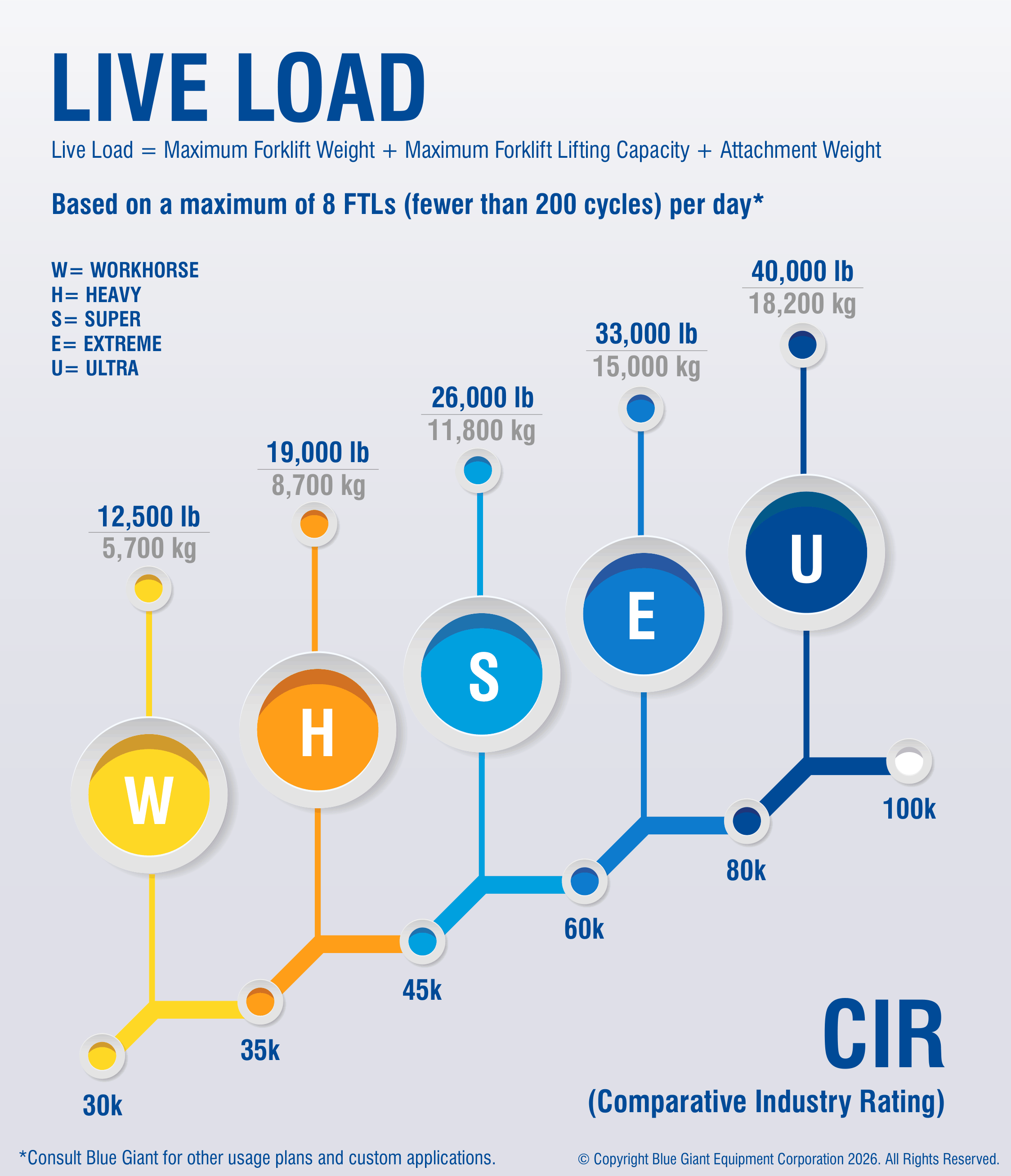
Use this chart to select the right capacity for your Live Load. You can also compare Blue Giant’s Live Load capacity ratings with the industry-standard Comparative Industry Rating (CIR) specifications. It helps identify the equivalent Blue Giant dock leveler model when a project specification calls for a specific capacity rating, such as a 35,000 or 45,000 leveler.
This reference chart is based on applications handling up to 8 full truck loads (FTLs) per day. For operations with higher traffic volumes or more demanding conditions, use the Leveler Load Capacity Calculator to customize capacity requirements based on live load factors and daily FTL frequency.
Please contact a Blue Giant Representative with your total load and daily usage data for a complete submittal for your needs.
Dock Leveler Load Capacity Calculator
Find the right dock leveler solution for your application with the Blue Giant Load Application Calculator. This easy-to-use tool helps you determine the appropriate load class and capacity requirements based on equipment, vehicle, and operational needs — helping ensure safer, more efficient dock performance.
Load Capacity Calculator