Common Dock Leveler Load Application Mistakes and How to Avoid Them
Selecting the correct dock leveler for the application and facility is the first step in protecting your equipment and ensuring reliable dock performance. Proper operation is just as important. Using a dock leveler as intended helps minimize excessive dynamic forces and unnecessary structural stress, reducing the risk of premature wear, damage, and costly repairs while extending the service life of the equipment.
Even a properly specified dock leveler can experience premature wear if actual operating conditions exceed the assumptions used during selection. Excessive deck angles, high travel speeds, sudden braking, and improper trailer setup can all increase the forces placed on the leveler.
Understanding these common load application mistakes can help facility managers and forklift operators protect their equipment and maintain safer, more efficient loading dock operations.
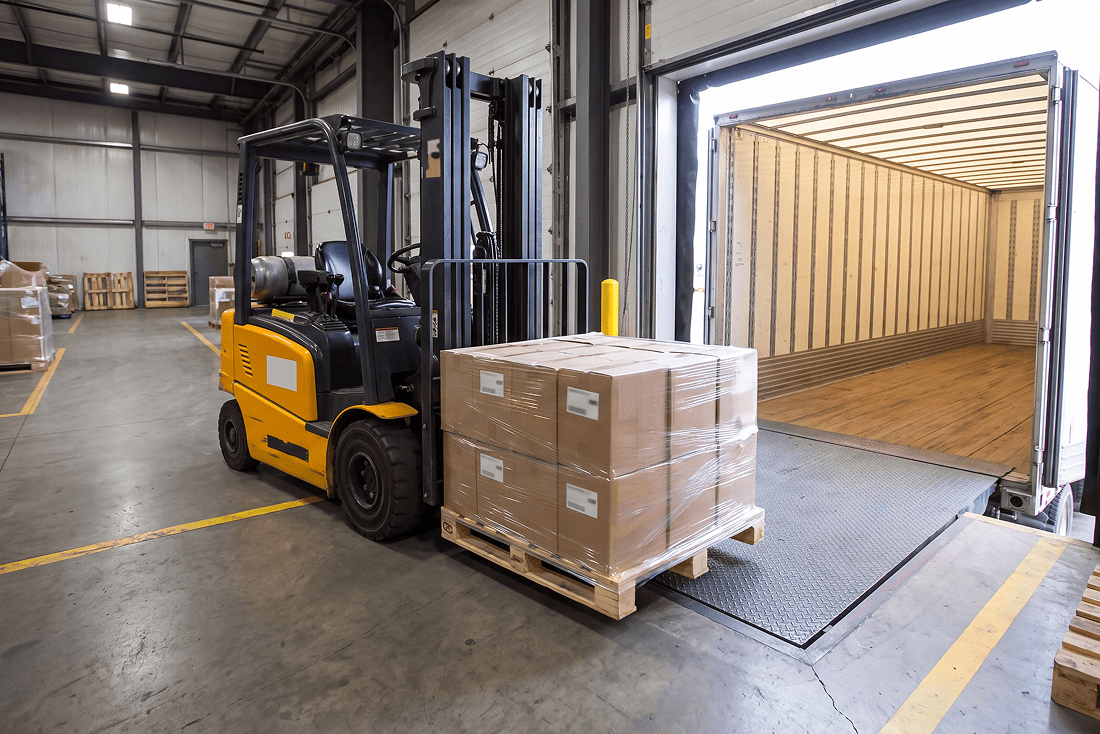
Mistake #1: Operating on an Excessive Deck Angle
A dock leveler is designed to bridge the height difference between the facility flooring and the trailer. Ideally, the dock and approach should be designed so the leveler does not have to operate at an unnecessarily steep angle or grade.
When a dock leveler operates at a deck angle or grade over 7%, forklift wheels can strike the deck structure with greater impact. This increases the dynamic forces placed on the leveler and can accelerate wear on the equipment.
Steep deck angles or grades can also create a rougher ride for forklift operators and increase the impact experienced as the vehicle travels across the leveler.
This problem can occur when a facility needs to service trailers or vehicles with significantly different bed heights without properly accounting for those differences during dock and driveway design.
Evaluate the dock approach, apron or yard space, and trailer heights during facility planning to avoid any issues with deck angle.
Mistake #2: Driving too Fast Across the Leveler
Speed is another important part of load application.
A forklift traveling across a dock leveler at higher speeds creates greater dynamic impact than one moving at a controlled speed. There is a considerable difference between vehicles traveling at 4 mph or less and those traveling over 4 mph.
Driving too quickly can put the actual operating conditions outside the assumptions used when evaluating the leveler’s dynamic load application. It can also make it more difficult for an operator to smoothly transition from the dock floor onto the leveler and into the trailer.
Always follow facility safety procedures and keep forklift speeds controlled when approaching, entering, and crossing the dock leveler. Operators should avoid treating the leveler as a high-speed transition between the warehouse and trailer.
Mistake #3: Hard Acceleration and Braking on the Leveler
One of the most overlooked sources of dynamic stress is how the forklift accelerates and stops.
Sudden acceleration or hard braking while the forklift is on the dock leveler can create additional forces on the leveler structure. For example, an operator may accelerate into the trailer and then brake sharply just before reaching the doorway.
That sudden deceleration transfers additional forces into the dock leveler instead of allowing the forklift to move smoothly across it.
Hard braking can also contribute to trailer movement, creating additional safety concerns during loading and unloading.
To avoid this, maintain a smooth, controlled flow across the leveler. Operators should slow down before entering the dock leveler rather than waiting until they reach the trailer doorway to brake suddenly. Avoid unnecessary hard acceleration or braking while traveling across the leveler.
Mistake #4: Failing to Properly Prepare the Trailer
The trailer itself can also affect how loads are applied to a dock leveler. Many modern trailers use air suspension. If the trailer’s air suspension remains inflated during loading and unloading, the trailer can bounce as a loaded forklift enters and exits.
That movement can create additional vertical forces as well as the normal horizontal forces associated with forklift traffic. The resulting motion can increase wear on the dock leveler, particularly around the lip and other areas that experience repeated impact.
It can also create an uncomfortable ride for the forklift operator and increase the amount of movement experienced by the load or product.
For trailers equipped with air suspension, Blue Giant recommends dumping the trailer air before deploying the dock leveler so the trailer is more stable during loading and unloading.
Facilities could also consider whether increasing the dock width to 7 feet is appropriate for their operation. A wider dock can provide additional clearance around a 6-foot dock leveler, reducing the edge zones where a forklift could unintentionally travel off the leveler. This additional space, combined with clear visual indicators and operator awareness, can help reinforce the intended travel path and reduce the risk of an incident.
Mistake #5: Driving Off the Side of the Leveler
Forklift operators should also pay attention to how they enter and exit the dock leveler.
The intended path is from the rear of the leveler toward the front and into the trailer. Driving off the side of the leveler can create unintended loading conditions and increase the risk of an incident.
Clear visual indicators can help operators recognize the intended travel path. Facilities can use contrasting colors between the warehouse floor and leveler ramp, as well as visual markings along the sides of the dock opening, to make the correct path easier to identify.
Load Application Is About More than Weight
These operating practices illustrate an important point: load application is not determined by weight alone.
The dynamic forces experienced by a dock leveler can change depending on how the equipment is used. Deck angle, vehicle speed, acceleration and braking, trailer suspension, and travel path can all affect the demands placed on the equipment.
That is why proper dock leveler selection requires more than looking at a capacity number.
When evaluating an application, consider the complete operating environment — including the forklift, maximum load, attachments, wheel configuration, vehicle speed, trailer traffic, and number of shifts. Then select equipment based on the actual conditions the dock will experience.
Take the Guesswork Out of Dock Leveler Selection
Proper equipment selection and proper operation work together to help maximize dock leveler performance and service life.
Before selecting or replacing a dock leveler, evaluate conditions at the facility and make sure the equipment is designed for the application. The Blue Giant Load Capacity Calculator helps Dealers and architects determine appropriate load class and capacity requirements based on equipment, vehicle, and operational needs.
By understanding both how much weight a dock leveler can handle and how that weight is applied, facilities can make more informed equipment decisions and avoid common causes of premature wear.