How to Choose the Right Dock Leveler for Your Load Application
Choosing a dock leveler is about more than selecting a weight rating. The right equipment must match the way a facility actually operates — including the forklifts being used, the loads they carry, attachments, and how frequently the dock is used.
That is why understanding load application is so important.
As Blue Giant continues to emphasize Live Load and application-based capacity selection, facility managers, dealers, and architects have a clearer way to match dock equipment to real-world operating conditions.
Here is how to evaluate your application and choose the right dock leveler for the job.
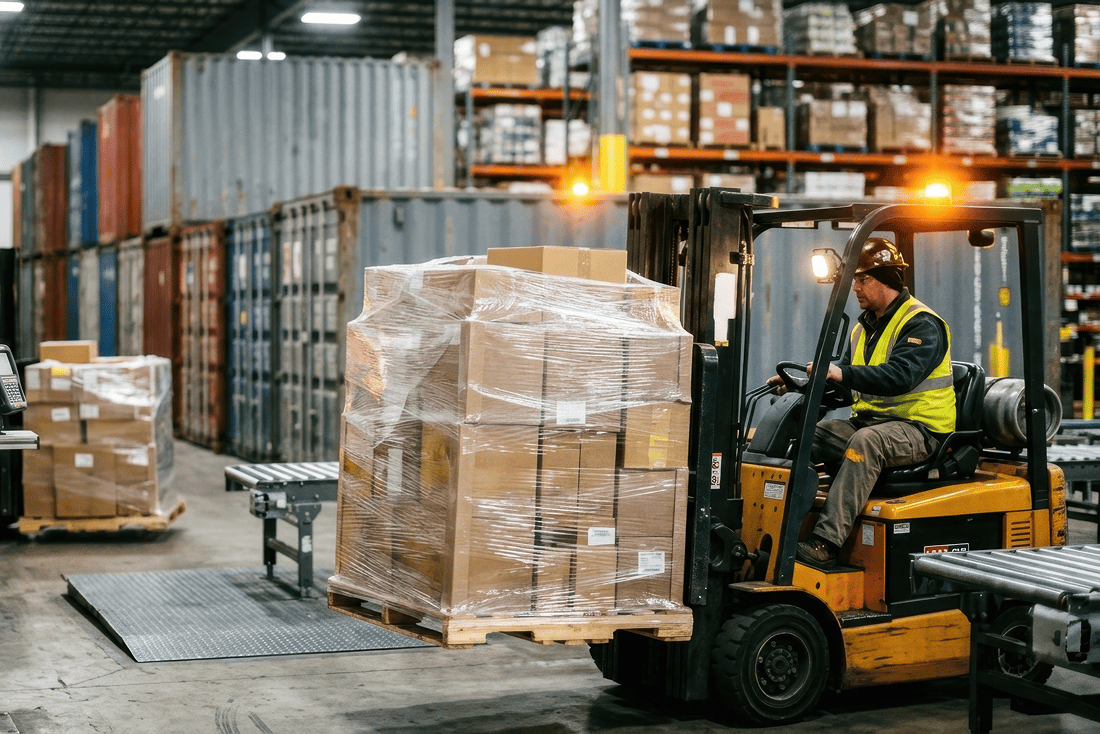
Start With the Equipment
The first step in determining the proper load application is understanding the equipment that will travel across the dock leveler.
A forklift's weight can be significantly greater than the load it carries. A forklift transporting a 2,000-pound pallet, for example, may itself weigh several thousand pounds or more depending on its size and configuration.
That means the load applied to the dock leveler is not simply the weight of the pallet or product, but also the weight of the equipment used to load and unload.
When evaluating an application, consider:
Maximum Forklift Lifting Capacity: Consider the maximum lifting capacity of the forklift in the facility, no matter how infrequently it is used.
- Forklift Weight: The weight of the heaviest forklift (with its battery, if it is an electric unit) that will use the dock.
- Forklift Configuration: Three-wheel and four-wheel forklifts can distribute their weight differently across the deck and create different structural demands. When specifying the forklift type, consider the number, size, and arrangement of the vehicle's wheels.
- Attachments: Equipment such as paper roll clamps, carpet poles, and double-pallet handlers can add significant weight and change how the load is distributed. The weight of any attachments should be added to the forklift weight.
- Maximum Cargo Weight: The heaviest pallet or load the forklift will lift and transport across the leveler.
- Vehicle Speed: Consider how fast vehicles will travel across the dock leveler. Blue Giant's load application guidelines distinguish between vehicles traveling at 4 mph or less and those traveling over 4 mph.
The goal is to determine the true operating load, rather than relying on a general rule or a traditional Comparative Industry Rating (CIR) that only measures a dock leveler's static load capacity.
Consider How the Load Is Applied
Two facilities can handle similar cargo weights but have very different load applications.
For example, a conventional four-wheel forklift carrying a standard pallet may place different demands on a dock leveler than a three-wheel forklift equipped with a heavy attachment.
Three-wheel forklifts can create higher concentrated wheel loads and different load distributions than four-wheel forklifts. Specialized attachments can also shift the forklift's center of gravity and increase the demands placed on the leveler.
This is why simply knowing the weight of the pallet or product is not enough.
Load application considers the complete operating combination — the forklift, attachment, pallet or product, and the way that equipment travels across the dock leveler.
Evaluate Daily Dock Traffic
Weight is only part of the equation. The frequency of use also matters.
A dock leveler in a facility handling a few truckloads each day experiences a very different operating environment from one in a high-volume distribution center operating around the clock.
Repeated forklift traffic places repeated loads and usage on the leveler. Over time, the frequency of those loads can have a significant effect on equipment wear and structural fatigue.
When specifying a dock leveler, consider the facility's trailer traffic volume, including the number of trucks visiting each dock position per shift, as well as the number of shifts per day.
For example:
- Light traffic: 1–3 trucks cycles per shift.
- Moderate traffic: 4–8 trucks cycles per shift.
- Heavy traffic: More than 8 trucks cycles per shift.
- Multiple shifts: A facility operating two or three shifts per day may have significantly different equipment requirements than a single-shift operation.
- Future growth: If truck and forklift traffic is expected to increase, today's operating volume should not be the only consideration.
The right leveler should be selected for the actual application and expected operating conditions, not simply today's minimum requirements.
Three Questions to Ask Before Selecting a Dock Leveler
Before specifying or selecting a dock leveler, make sure you can answer these key application questions:
1. What is the heaviest equipment and load combination?
Determine the maximum operating weight by considering the maximum forklift weight with battery, attachments, and the maximum pallet or load the forklift will lift and transport. Also consider the forklift's maximum lifting capacity, regardless of how frequently that capacity is used.
2. How is the load being applied?
Consider forklift type and wheel configuration, attachments, vehicle speed, and other factors that can affect how weight is distributed across the deck.
3. How often will the dock be used?
Determine the expected trailer traffic volume in trucks serviced per shift and the number of shifts per day. These operating factors help determine the appropriate load class and capacity for the application.
These factors provide a much more accurate picture of the application than a generic weight multiplier or static rating alone.
Take the Guesswork Out of Dock Leveler Selection
Selecting a dock leveler does not have to mean deciphering complicated rating codes or relying on arbitrary calculations.
The Blue Giant Load Capacity Calculator helps dealers and architects evaluate the factors that matter most — including forklift lifting capacity, forklift weight, attachments, maximum pallet weight, forklift configuration, vehicle speed, trailer traffic volume, and number of shifts — to determine the appropriate live load and equipment requirements for the application.
Registered Blue Giant Dealers and architects can log in to the Dealer Portal to access the Load Capacity Calculator.
By selecting equipment based on actual load application, facilities can avoid under-specifying their dock levelers, reduce the risk of premature equipment failure, and choose equipment better suited to their day-to-day operations.