The Hidden Costs of White Light: Is Your Loading Dock Leaking Profit?
What looks like a tiny gap around a dock door is often a much bigger problem than it appears.
In warehouse and facility operations, "white light" refers to the daylight visible around a trailer or dock opening when a truck is parked at the bay. While these small openings might seem minor, they quietly drain profitability, compromise food safety, and increase energy bills.
In food manufacturing and other high-compliance industries, visible white light is widely used as a quick visual indicator that the loading dock is not fully sealed. If daylight can be seen around a closed door or parked trailer, outside air, moisture, dust, pests, and other contaminants may also be entering the facility.
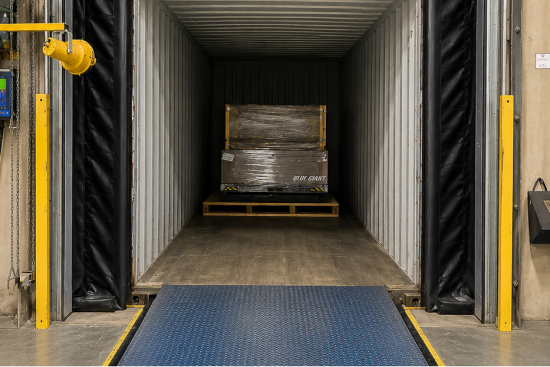
While there is no specific FDA regulation defining an acceptable amount of "white light," minimizing or eliminating visible light is considered an industry best practice for maintaining environmental control and supporting food safety compliance. The FDA does enforce pest-proofing mandates, which includes sealing gaps, cracks, and holes in walls, floors, doors, and windows to block entry.
Understanding what those gaps are really costing your facility is the first step toward improving dock performance and protecting your bottom line.
What White Light Is Really Causing in Your Facility
Even small openings at the loading dock can lead to significant operational and financial impacts, including:
- Escalating Energy Bills: Conditioned air escapes while outdoor heat or cold streams in, forcing HVAC and refrigeration systems to work overtime.
- Contamination Risks: Unsealed gaps serve as open invitations for contaminants, moisture, pests, and outdoor pollutants.
- Product and Comfort Issues: Temperature fluctuations near loading dock doors can compromise sensitive inventory and create uncomfortable, unsafe working conditions for employees.
- Audit and Compliance Penalties: Gaps in environmental control can trigger findings during routine or third-party quality assurance inspections.
Why Environmental Control Matters Most in High-Compliance Facilities
Across food, pharmaceutical, and high-compliance supply chains, loading dock conditions face heavy scrutiny during customer, third-party, and regulatory audits.
FDA Current Good Manufacturing Practices (CGMPs), USDA inspection requirements, and Global Food Safety Initiative (GFSI)-benchmarked food safety programs such as SQF and BRCGS all require facilities to maintain sanitary conditions, prevent pest ingress, and protect products from contamination. While these standards do not prescribe a specific allowable "white light" measurement, maintaining a well-sealed loading dock is an important part of achieving these objectives.
Environmental control, cleanliness, and dock integrity directly influence audit outcomes, supplier approvals, and overall compliance records. Food safety regulations, including the FDA Food Code and USDA standards, explicitly outline strict requirements for maintaining sanitary conditions and preventing cross-contamination at points of entry.
A Key Question for Your Operations Team
"Do your corporate QA teams, customers, or third-party auditors evaluate your loading dock’s environmental controls during food safety inspections?"
If the answer is yes, your dock levelers and seals play a much larger role in your business continuity than just moving freight.
How to Conduct a White Light Inspection
A white light inspection is a simple but effective way to evaluate the integrity of your loading dock seal. During routine maintenance or facility inspections, inspect the dock under two conditions to identify potential gaps and air leaks:
- Idle dock: With no trailer at the dock and fully closed overhead door, inspect from inside the building for any daylight visible around the door opening. Visible light may indicate damaged door components, or gaps that allow air infiltration.
- Trailer at the dock: With a trailer positioned at the dock, and overhead door open, inspect the dock opening from inside the building for any daylight visible around the dock seal or between the trailer and the building. If practical, reduce interior lighting to make any incoming daylight easier to identify. Any visible daylight indicates a potential pathway for conditioned air loss, moisture intrusion, insects, rodents, dust, and airborne contaminants.
During your inspection, look for:
- Visible daylight at the top, sides, and bottom of the dock opening around the trailer.
- Worn, damaged, or compressed dock seals and shelters.
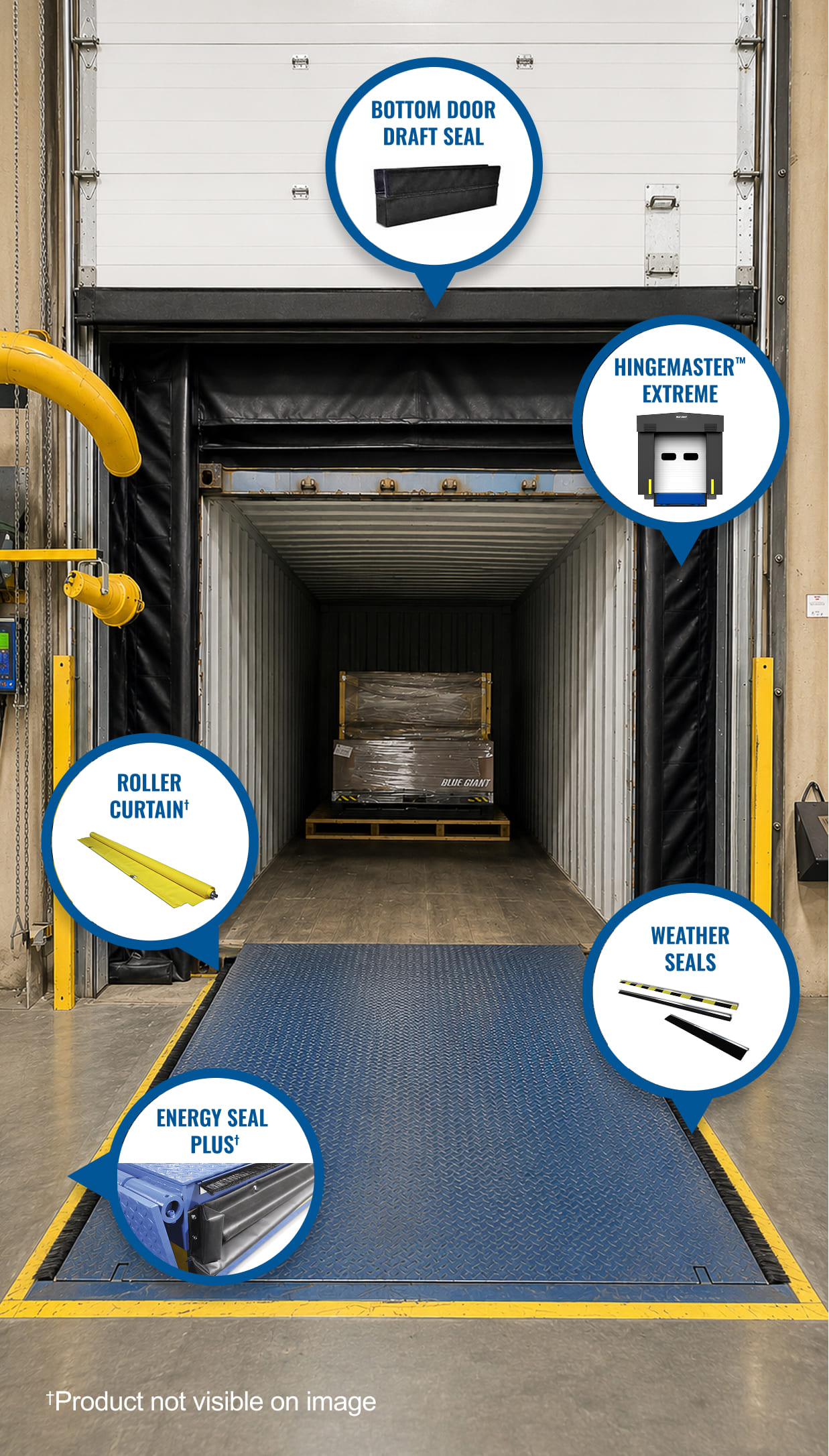
- Gaps around levelers and missing or degraded weather seals.
- Drafts or moisture buildup where outdoor air enters the pit.
A simple visual inspection can quickly highlight high-risk areas that threaten your sanitation, temperature stability, and audit readiness.
Industry Best Practice: Aim for Zero Visible Light
Although food safety regulations focus on preventing contamination and pest entry rather than specifying an allowable light gap, many food manufacturers, third-party auditors, and quality assurance teams treat any visible daylight around a closed dock opening as a condition that should be corrected. Eliminating white light helps strengthen environmental control, reduce energy loss, improve sanitation, and support audit readiness.
Solutions for a Tighter Seal
Vertical Storing Dock Levelers
For temperature-controlled and hygienic environments, Vertical Storing Dock Levelers are widely recognized as the preferred solution.
Vertical-storing levelers offer important operational advantages over conventional pit-style levelers in food and beverage, pharmaceutical, and other regulated facilities:
- Improved hygienic cleaning and washdown. When the leveler is stored in its vertical position, the entire pit floor is exposed for easier cleaning, washdown, and inspection while allowing the overhead door to remain closed. This helps support sanitation protocols without compromising the facility's controlled environment and minimizes areas where debris, moisture, and bacteria can accumulate.
- Drive-through capability. With the leveler stored upright and the pit unobstructed, trucks or trailers can pull straight up to the building opening, allowing swing doors and security seals to be opened within a controlled indoor environment. This protects cargo from weather exposure and helps maintain refrigerated trailers temperature.
- Enhanced environmental control. Closing the overhead door directly against the pit floor creates a tighter building envelope that helps maintain interior temperatures and reduce conditioned air loss.
- Improved pest prevention. Reducing common gaps around traditional dock levelers limits potential entry points for insects and rodents while supporting food safety initiatives.
Retrofitting Pit-Style Levelers
If your facility currently operates with traditional pit-style levelers and a full conversion is not immediately practical, you do not have to live with energy loss. Addressing gaps with properly specified dock seals and shelters, dock leveler perimeter seals, and weather seals and seal wedges can deliver immediate, meaningful improvements in environmental control.
Protect Your Dock, Product, and Profit
White light is rarely just a light issue — it is a visible indicator of operational risk. By looking beyond basic equipment specs and proactively sealing your dock openings, you can reduce energy waste, simplify compliance, and build a safer, cleaner, and more efficient loading environment.