The Real Cost of a Workplace Injury vs. the Investment in Ergonomic Lift Solutions
For many warehouses, manufacturing plants, and distribution centers, manual material handling is part of the job.
Workers lift boxes. They move parts. They load and unload materials. They reach, bend, pull, and repeat the same motions for hours at a time.
These tasks can also create a serious business risk.
A workplace injury can lead to medical costs and workers’ compensation claims. But the cost does not stop there. Companies may also face overtime, lost production, replacement-worker training, administrative work, and other costs that are harder to see.
That is why the business case for ergonomics should look at more than just the price of equipment. The better question is: what does it cost to leave the risk in place, and what could the right ergonomic solution save?
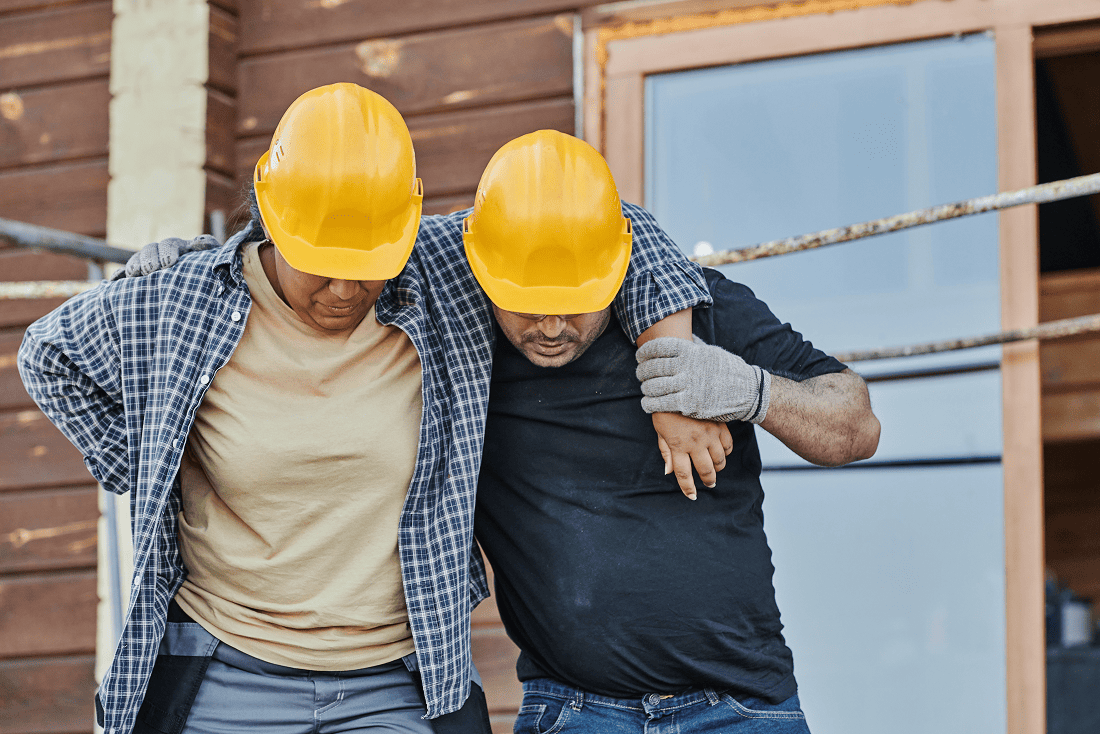
The Cost of Workplace Injuries Is Bigger than the Claim
The Occupational Safety and Health Administration (OSHA) separates workplace injury costs into direct and indirect costs.
Direct costs can include:
- Workers’ compensation claims
- Medical treatment
- Rehabilitation
- Legal costs
- Lost-time wages
Indirect costs can include:
- Overtime for other employees
- Training replacement workers
- Accident investigation
- Lost productivity or production delays
- Administrative time
- Lower employee morale
- Increased insurance costs
- Equipment or product damage
- Regulatory compliance and potential citation costs
- Mandatory workplace corrective actions
OSHA notes that these indirect costs can have a major effect on an employer’s bottom line. Its Safety Pays tool helps employers estimate both direct and indirect injury costs.
This matters because an injury that looks like a $30,000 workers’ compensation claim on paper may create a much larger business impact once the rest of the costs are added.
Manual Handling Remains a Major Source of Injury Costs
The latest Liberty Mutual Workplace Safety Index provides a useful view of the scale of the problem. The 2025 index estimates that in the U.S. alone, employers paid about $58.78 billion for the most serious workplace injuries. These are injuries that caused employees to miss more than five days of work.
The largest category was overexertion involving outside sources, which accounted for about $13.7 billion in costs.
Liberty Mutual says this category is largely tied to manual material handling.
Falls on the same level ranked second at about $10.5 billion. Struck-by incidents and falls to a lower level were also among the leading causes of injury costs.
There is also a strong connection to musculoskeletal risk.
Liberty Mutual found that 56% of workplace injuries in its analysis affected the back, shoulder, knee, or multiple body parts. These injuries accounted for nearly $32.6 billion in costs.
The 2025 index is based on 2022 data, so these figures should be viewed as a benchmark rather than a current-year claim estimate.
Still, the message is clear:
Manual handling and physical exertion represent a major cost opportunity for employers.
Ergonomic Risk Goes Beyond Back Injuries
It’s easy to think about ergonomics as a “back injury” issue, but the risk is broader than that.
The National Institute for Occupational Safety and Health (NIOSH) identifies several work factors that can contribute to musculoskeletal disorders, including lifting, pushing, pulling, carrying, repetitive work, forceful movements, bending, twisting, and awkward postures. These risks can affect back, shoulders, arms, hands, and other parts of the body.
U.S. Bureau of Labor Statistics (BLS) data shows just how common these injuries remain. In 2024, private industry employers reported 568,150 cases involving sprains, strains, and tears that resulted in days away from work, restricted work, or job transfer. There were also 248,180 cases involving the back and 479,480 cases involving falls, slips, and trips.
That means a good ergonomic program should not focus on one injury type or one piece of equipment. It should start with the task. Ask:
- What is the worker lifting?
- How heavy is it?
- How often is it handled?
- How far does the worker reach?
- Does the worker have to bend or twist?
- Does the worker need to hold the load while positioning it?
- Could a mechanical assist device remove some of that physical effort?
These answers can point to different solutions.
What Can One Injury Cost?
OSHA's Safety Pays tool uses workers’ compensation claim data from the National Council on Compensation Insurance (NCCI) to estimate the direct and indirect costs of different injury types.
The data behind the tool is a bit older (it uses lost-time claims from policy years 2015-2017) so it should not be treated as a current market price, but it provides a useful benchmark for building a business case to invest in ergonomic efforts.
Some OSHA benchmarks include:
Injury Type | OSHA average direct cost | OSHA indirect-cost ratio | Estimated direct + indirect cost* |
Sprain | $30,487 | 1.1 | ~$64,000 |
Strain | $32,023 | 1.1 | ~$67,000 |
Carpal tunnel syndrome | $30,930 | 1.1 | ~$65,000 |
Fracture | $54,856 | 1.1 | ~$115,000 |
Crushing injury | $67,003 | 1.1 | ~$141,000 |
Dislocation | $75,190 | 1.1 | ~$158,000 |
*Estimated total uses OSHA's published indirect-cost ratio: direct cost + (direct cost × 1.1). These are planning benchmarks, not predictions of the cost of a specific claim. Actual costs vary by injury, industry, location, insurance structure, wages, severity, and other factors.
The numbers show why equipment cost should be put into context.
A $10,000 ergonomic improvement may look expensive when viewed by itself.
It looks very different when compared with the potential cost of a single serious injury.
Scenario 1: Back Strain vs. a Lift Table
Consider a worker who repeatedly removes products from a pallet.
The pallet starts at a comfortable height. As the load gets smaller, the worker must reach farther down. Over time, the job involves repeated bending, reaching, and lifting.
This is the type of task where a lift table may help.
A lift table can keep the load closer to a comfortable working height, reducing bending and reaching, while making the material easier to handle.
OSHA identifies changing the height or position of materials and using mechanical devices that lift or tilt materials as examples of engineering controls for ergonomic hazards.
Example business case. Let’s assume:
- Installed lift table investment: $10,000
- OSHA strain benchmark: $32,023 in direct costs
- OSHA indirect-cost ratio: 1.1
- Estimated total impact: ~$67,000
If the lift table helps prevent just one injury that would otherwise cost the business $67,000, the potential avoided cost is about 6.7 times the $10,000 equipment investment.
That does not mean every lift table will prevent an injury or deliver a 6.7x return. But it does show how quickly the economics can change when an engineering control addresses a known risk.
Scenario 2: Upper Extremity Strain vs. an Air Balancer
Not every ergonomic problem involves lifting from the floor.
A worker may repeatedly pick up a component, move it across a workstation, rotate it, and place it into position.
The load may not be extremely heavy, but the repetition of movement matters.
Forceful hand and wrist movements, high repetition, and awkward upper-body positions can contribute to upper-extremity musculoskeletal disorders. NIOSH recommends evaluating these types of risks as part of an ergonomic assessment.
An air balancer or other lift assist device can help support and position a load while reducing the amount of force the worker must provide.
This can be especially useful when:
- The same part is handled many times per hour
- The worker must hold a load while positioning it
- The task requires reaching or awkward arm positions
- Loads vary in weight
- Two-handed handling is needed for accuracy
- Workers must repeatedly lift parts from a fixed location
Example business case. Let’s assume:
Using the OSHA carpal tunnel benchmark as one planning reference:
- Direct cost: $30,930
- Indirect cost using OSHA's ratio: ~$34,000
- Estimated total: ~$65,000
Now compare that with an air balancer project using an example installed investment of $15,000.
Preventing even just one $65,000 injury would represent a potential avoided cost of more than 4x the equipment investment.
Again, the purpose of this calculation is not to promise a specific ROI, but to give safety and operations leaders a way to compare risk exposure with investment.
Scenario 3: Material Handling Injury vs. a Jib Crane
Some jobs require workers to move heavier components over a short distance. The problem may not be the lifting height alone, though.
Workers may have to pick up a component, carry it, hold it while positioning it, or move it into a machine or workstation.
A jib crane with the right hoist and lifting attachment can move the load mechanically instead of requiring the worker to manually lift and carry it.
This can be useful for applications such as:
- Moving dies or tooling
- Positioning machine components
- Loading and unloading workstations
- Moving motors or pumps
- Handling heavy parts
- Transferring materials between work areas
A properly designed crane system can reduce manual handling, but the crane itself must be selected, installed, inspected, and operated correctly. It should be treated as part of a complete material-handling safety program — not as a guarantee against injury.
Example business case. Let’s assume:
- OSHA fracture estimate: $54,856 in direct costs
- OSHA crushing injury estimate: $67,003 in direct costs
- OSHA indirect-cost ratio: 1.1
- Estimated total impact: ~$115,000 and ~$141,000, respectively
If a jib crane project costs $25,000, one prevented injury in this range could potentially represent several times the equipment investment.
The important point is not that a jib crane “costs less than an injury,” it’s that the right engineering control can be financially small compared with the risk it is designed to address.
ROI Is Not Only About Injuries Prevented
Injury-cost avoidance is only one part of the return on an ergonomic investment. The right solution can also improve how material moves through an operation, reduce unnecessary physical effort, minimize interruptions, and help workers perform repetitive tasks more consistently.
An ergonomic solution may allow a worker to:
- Spend less time repositioning a load
- Move material with less physical effort
- Work at a better height
- Reduce unnecessary reaching
- Reduce manual carrying
- Complete a task with fewer interruptions
- Handle heavier or awkward loads more consistently
NIOSH recommends measuring ergonomic programs using both safety and business measures, including injury costs, absenteeism, turnover, productivity, and total savings.
Research on ergonomic interventions in U.S. manufacturing has also found strong economic results. One CDC/NIOSH analysis of three manufacturing interventions found annual cost savings of $111 to $1,556 per employee, benefit-to-cost ratios from 5 to 84, and payback periods of less than one year. The researchers found that productivity improvements were a major source of savings.
Another NIOSH study of lift-assist devices in furniture manufacturing found that a machine-room lift reduced peak trunk angle by an average of 76% and reduced task completion time by an average of 19%.
These results do not mean that every ergonomic project will produce the same savings, but they do show why ergonomics should be evaluated as an operations improvement, not just a safety expense.
Real-World Example: Calculate the Payback
Suppose a facility is considering a $20,000 ergonomic lift solution.
The current task has a history of:
- Repeated manual lifting
- Bending below waist height
- High daily lift frequency
- Worker complaints
- Overtime when employees are absent
- Occasional recordable injuries
The company estimates that the equipment could prevent one injury over several years and save $8,000 per year through productivity improvements. The simple annual business benefit could look like this:
Benefit | Estimated Annual Value |
Injury-cost avoidance | $20,000 |
Productivity improvement | $8,000 |
Total annual benefit | $28,000 |
Equipment investment | $20,000 |
Simple payback calculation:
$20,000 ÷ $28,000 = 0.71 years. That is ~8.5 months.
The actual calculation should use the company’s own injury history, labor rates, productivity data, equipment quote, maintenance costs, and expected service life.
NIOSH specifically recommends using cost-benefit analysis and ROI calculations when evaluating ergonomic interventions.
Choosing the Right Ergonomic Solution
There is no single piece of equipment that solves every material-handling problem. The right solution will depend on the task.
The key is to start with the risk, not the equipment.
Workplace challenge | Potential solution | Primary goal |
Repeated lifting from pallets | Lift table | Reduce bending and reaching |
Loading/unloading at variable heights | Lift table or positioning equipment | Keeps loads at a better working height |
Repetitive component handling | Air balancer | Reduce lifting force and upper-body strain |
Moving heavy parts around a workstation | Jib crane and hoist | Reduce manual lifting and carrying |
Reaching across a workstation | Lift/tilt or positioning equipment | Bring material closer to the worker |
Repetitive horizontal movement | Conveyor, cart, or other mechanical assist | Reduce carrying and pushing effort |
Awkward or heavy loads | Mechanical lifting device | Reduce force and manual handling |
NIOSH recommends using the hierarchy of controls when addressing ergonomic hazards. Elimination and engineering controls are preferred because they can reduce exposure without relying as heavily on worker behavior. Mechanical assist devices are one example of an engineering control.
Build the Business Case Around the Operation
A strong ergonomic investment proposal should answer five questions:
- What is the risk? Identify the task, load, frequency, posture, force, and exposure time.
- What has the risk already cost? Look at workers’ compensation claims, medical costs, lost workdays, restricted-duty days, overtime, absenteeism, turnover, productivity losses.
- What could the risk cost in the future? Use your own specific injury history when possible. If internal data is limited, OSHA’s Safety Pays estimates can provide a starting point.
- What solution controls the risk? Consider lift tables, air balancers, jib cranes, hoists, conveyors, carts, positioners, and other mechanical assist equipment. The solution should match the task.
- What is the total investment? Do not look at equipment price alone. Include: equipment, installation, electrical or air requirements, engineering, training, maintenance, inspection, downtime during installation, expected useful lift. Then compare that total with the expected annual benefit.
The Cost of Doing Nothing Can Be Higher than the Cost of Equipment
An ergonomic solution is an investment, but so is accepting a known manual handling risk. The difference is that the equipment cost is visible.
The cost of an injury is often spread across many departments:
- Safety sees the incident.
- HR sees the absence.
- Operations sees the lost production.
- Finance sees the claim.
- Supervisors see the overtime.
- Employees see the workload left behind.
A good ergonomic solution can bring those costs together and address the risk at its source. The goal is not to buy equipment simply because it’s available. The goal is to identify where manual handling creates risk, select the right engineering control, and build a business case based on measurable results.
One Injury Can Change the ROI Calculation
A $10,000, $20,000, or $30,000 equipment investment may require management approval. A serious injury can cost many times that amount.
Current industry data shows that overexertion and manual material handling remain among the largest sources of workplace injury costs. OSHA and NIOSH also recognize engineering controls and mechanical assist devices as important tools for reducing ergonomic risks.
That makes ergonomic equipment more than a line item in a capital budget. It can be a way to protect workers, reduce operational risk, and improve the way work gets done.
Every operation is different, and every material-handling task has its own challenges.
The right solution may be a lift table, air balancer, jib crane, tilter, conveyor, or another engineered system.
Start by looking at the task. Measure the risk. Calculate the potential cost. Then compare that cost with the investment required to control it.
Preventing even just one serious injury may be enough to justify the investment. Improving the task every day can make the business case even stronger.