What You Need to Know About the New Load Capacity Standards
If you work around loading docks, you have probably seen capacity ratings like "30,000 lbs" printed on dock leveler data plates. But what does that number actually mean? For decades, the loading dock industry relied on a rating system called Comparative Industry Rating, or CIR.
Many people assume a 30,000-pound CIR means a forklift carrying a 30,000 lb load can safely drive across the dock leveler. Unfortunately, that is not how CIR works.
Understanding dock leveler capacity ratings is essential for maintaining worker safety and ensuring the dock is properly matched to its intended application.
This article explains what the CIR rating means, how live load ratings are determined, and why understanding dock capacity is becoming increasingly important as industry standards and equipment requirements evolve.
What Is CIR in Loading Docks?
CIR stands for Comparative Industry Rating. It measures a dock leveler's static load capacity.
Static weight is the total weight a dock leveler can support when it is closed, parked, and resting with its lip in the keepers. Think of static weight like a heavy box resting on a dining table. The table can hold a lot of weight as long as nothing moves.
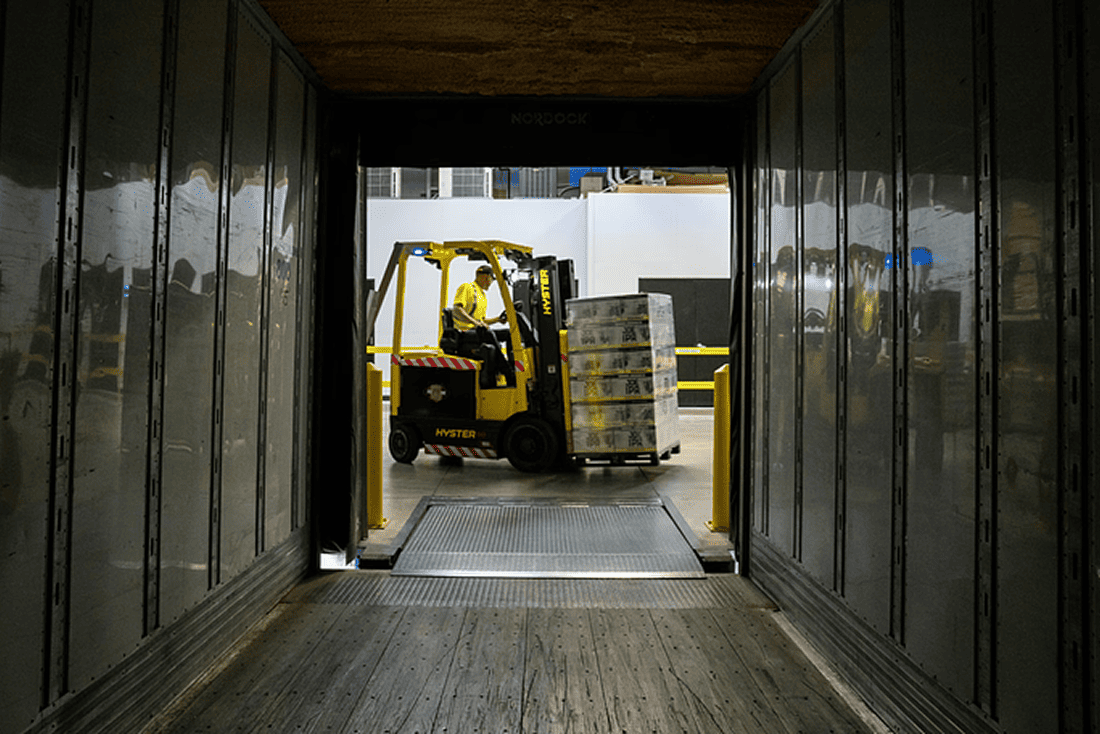
However, loading dock levelers do not just hold parked weight. In daily operations, a loaded forklift drives across the leveler deck and lip to enter a trailer. That moving weight is called a dynamic load or live load.
Static Load vs. Live Load: What Is the Difference?
To pick the right dock leveler, you must understand the difference between static and live loads:
- Static Load: The weight a dock leveler can support when stationary with the load evenly distributed across the deck in its stored position.
- Live Load (Dynamic Load): The real-world weight of a moving forklift, its cargo, and the driver moving across the dock leveler.
Because static ratings only measure parked equipment, they can lead to mistakes such as buyers purchasing levelers of lower load class and not up to the challenge of their daily work. For example, a dock leveler rated at 30,000 lbs CIR might only have an actual live load capacity of 12,500 lbs.
Why Traditional Capacity Ratings Could Lead to Confusion
When a facility buys equipment based on static CIR numbers, serious problems can happen:
- Safety Risks: If a forklift and its load exceed the dock leveler’s rated live-load capacity, excessive forces can be placed on the deck and lip. This can result in structural damage, deformation, or failure of the leveler, creating a serious safety hazard for forklift operators and other workers in the area.
- Early Equipment Failure: Overloading a leveler wears out the frame and mechanical parts quickly. Instead of lasting its full lifespan, the equipment breaks down early and it needs to be replaced sooner.
- Confusing Industry Data Plates: Many dock manufacturers use complicated letter codes or long investment guides to label their products. This makes it hard for business owners to know what they are actually buying.
The New Standard: Transparent Live Load Ratings
Blue Giant is changing the industry by switching to transparent Live Load ratings. Instead of confusing buyers with static CIR numbers, Blue Giant clearly lists the actual operational weight the leveler can handle every day.
Blue Giant has also replaced confusing letter codes with clear, simple product names like Workhorse and Heavy. This makes it easy to match equipment to a facility's real daily workload without any guessing.
Whether your building processes eight trucks a day or runs nonstop 24-hour shifts, you can easily find equipment built for your exact operational volume to help ensure proper load handling.
How to Calculate Your Facility's True Load Needs
Selecting the correct dock leveler capacity no longer requires complicated math formulas or multipliers. When planning and selecting a loading dock leveler, there are four key factors to consider:
- Forklift Weight: The weight of the heaviest forklift in your operation.
- Max Cargo Weight: The weight of the heaviest pallet or load to be carried.
- Total Gross Load: The weight of the forklift weight, maximum cargo, attachments/accessories, and operator.
- Daily Cycles: How many trucks enter and leave the dock position each day.
- Future Growth: How much expected shift volume growth in the operation over the next 5 to 10 years.
Blue Giant Dealers can use the Blue Giant Load Capacity Calculator to determine the appropriate dock leveler solution for each application. This easy-to-use tool evaluates the equipment, vehicle, load, and operating conditions to help determine the appropriate load class and capacity requirements, supporting safer and more reliable dock performance.
Log in to the Dealer Portal to access the Load Capacity Calculator.