What Can Be Customized on a Lift Table?
A lift table is often selected based on a few basic specifications: load capacity, platform size, and vertical travel. For many material handling and ergonomic applications, a standard configuration may provide everything an operation needs.
Other applications are less straightforward.
A manufacturing process may require a platform to accommodate an unusually-shaped component or fixture. A distribution operation may need to position oversized loads within a restricted footprint. A production line may require repeatable movement between specific elevations, while an automated facility may need a lift table to communicate with conveyors, robots, or automated guided vehicles (AGVs)/
In these situations, customization can help align the equipment with the application, rather than requiring the application to work around the equipment.
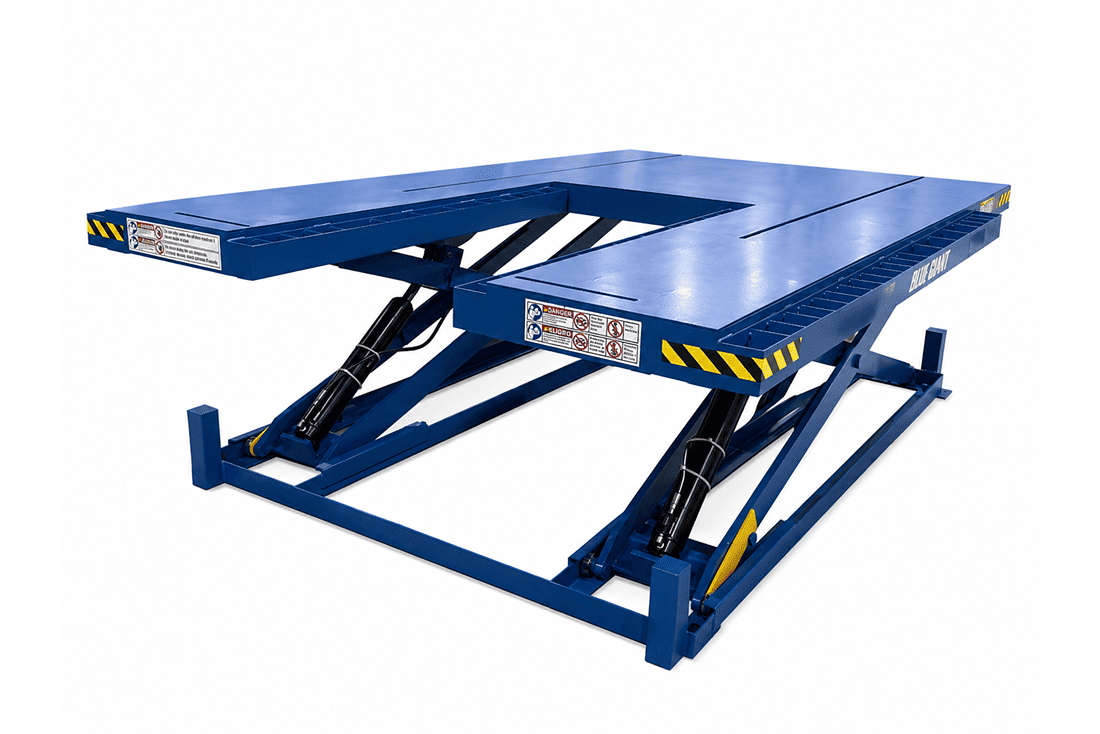
But customization does not always mean designing a completely one-off machine. Depending on the requirements, the right solution may be a standard lift table, a modified configuration, or a more extensively engineered lift system.
Understanding what can be customized, and why those specifications matter, is an important part of selecting the right lift table.
What Does "Custom" Mean for a Lift Table?
A custom lift table is equipment that has been modified or engineered beyond a standard configuration to address specific application requirements.
The change could be relatively simple, such as adjusting platform dimensions. It may also involve several interconnected specifications such as capacity, travel, controls, duty cycle, safety features, and integration with other equipment.
The important distinction is that customization should address a defined operational requirement.
For example, a larger platform may be necessary to support an oversized pallet, but making the platform larger than necessary can consume valuable floor space. Similarly, selecting a lift with more vertical travel than the process requires does not necessarily provide a benefit.
The goal is not to customize as much as possible. It is to determine which specifications need to change to make the equipment perform effectively within the application.
What Can Be Customized on a Lift Table?
The available configurations depend on the type of lift table and the application, but several key characteristics can be adapted to meet specific requirements.
Platform Size and Configuration
Platform dimensions are among the most common considerations when a standard lift table does not fit the load or workspace.
A conventional rectangular platform may be appropriate for pallets and containers with standard footprints. Other applications may involve oversized loads, long components, production fixtures, or products that need to be positioned in a particular way.
Custom platform configurations can address requirements such as:
- Non-standard length or width
- Oversized or irregular loads
- U-shaped of V-shaped configurations
- Cutouts for tooling, fixtures, hoses, or wiring
- Specialized surfaces
- Fixture-specific positioning areas
- Expanding slide-out platform sections
The right platform configuration depends on more than the dimensions of the load. The loading method, operator access, surrounding equipment, and available floor space should also be considered.
For example, a platform that is large enough to support an oversized pallet may not be suitable if it interferes with a nearby conveyor or restricts access for an operator. Conversely, a platform that is too small may create unwanted load overhand or make positioning more difficult.
When should you consider a custom platform?
A custom platform may be appropriate when a standard deck cannot provide the required combination of load support, access, positioning, and integration with the surrounding workspace.
Capacity and Load Characteristics
Lift table capacity is not simply a matter of identifying the heaviest load that will be lifted.
The way a load is positioned on the platform can affect the equipment requirements. Engineers may need to consider:
- Maximum load weight
- Load distribution
- Center of gravity
- Concentrated or offset loads
- Load dimensions
- Loading and unloading method
- Platform dimensions
- Frequency of operation
Two loads with the same weight can create different equipment requirements if one is evenly distributed while the other is concentrated towards one side of the platform.
The loading method also matters. A lift table used with a forklift, pallet jack, conveyor, or automated vehicle may experience different loading conditions.
For high-frequency applications, cycle requirements should also be considered when determining the appropriate lift configuration.
When should you consider a custom capacity or configuration?
Customization may be appropriate when the load exceeds standard capacity ranges, has an unusual distribution or center of gravity, or must be handled in a way that creates requirements beyond a standard configuration.
The objective is to match the lift table to the complete load profile rather than selecting equipment based solely on maximum weight.
Vertical Travel and Working Height
The amount of vertical movement required is another important specification.
A lift table used for ergonomic positioning may only need enough travel to keep materials within a comfortable working range. A lift table integrated into a production line may need to move a load between two defined elevations. A transfer application may require the raised and lowered positions to align precisely with adjacent equipment.
Important dimensions can include:
- Lowered height
- Raised height
- Total vertical travel
- Required working height
- Transfer elevations
- Conveyor elevations
- Available overhead clearance
More travel is not automatically better. If the application only requires a specific range of movement, additional travel may provide little practical benefit while affecting the overall equipment configuration.
Defining the actual minimum and maximum elevations required by the process is therefore more useful than simply specifying a desired lift height.
When should you consider customized travel?
Custom travel may be worth evaluating when standard raised or lowered heights do not align with the process, when the lift must transfer loads between different elevations, or when available floor and overhead space create dimensional constraints.
Duty Cycle and High Frequency Operation
How often a lift table operates can be just as important as what it lifts.
A table used occasionally in a warehouse may have very different requirements from equipment operating continuously across multiple shifts in a manufacturing environment.
Duty-cycle considerations can include:
- Number of cycles per hour
- Hours of operation per shift
- Number of shifts
- Required cycle life
- Repeated positioning
- Automated production requirements
- Expected downtime tolerance
High-cycle applications may require equipment specifically designed around frequent operation and long-term durability.
For example, a lift table incorporated into an automated production process may be expected to perform the same movement thousands of times over an operating period. In that situation, the duty requirements should be considered during equipment selection rather than treated as an afterthought.
When should you consider high-cycle equipment?
High-cycle or application-specific configurations may be appropriate for multi-shift production, automated material handling, repetitive positioning, and processes where equipment availability has a direct effect on throughput.
Controls and Operating Logic
The control system should reflect how the lift table will actually be used.
A manually operated lift table may only require straightforward raise-and-lower controls. A more complex application may require the lift to move in predetermined positions, repeat a sequence, or coordinate its movement with other equipment.
Custom control configurations can support requirements such as:
- Preset positioning
- Automatic indexing
- Repeatable movement
- Programmed cycles
- Multi-product operation
- Sensor-based operation
- Integration with production equipment
- Automated material handling
Consider a production process in which a component needs to be positioned at a particular height for assembly, lowered after the operation, and then returned to a starting position. In that application, repeatability may be more important than simply achieving the maximum travel speed.
For automated processes, the lift may also need to interact with sensors, conveyors, robots, or AGVs.
When should you consider customized controls?
Custom controls become more relevant when the lift is part of a repeatable production process, when operators need specific positioning functions, or when the equipment needs to interact with other automated systems.
Safety Features and Personnel Protection
Safety requirements should be considered alongside the way the lift table is loaded, operated, and accessed.
A lift used to position pallets has different operating conditions from a lift incorporated into a personnel work platform. The risks associated with access, movement, loading, and interaction with the equipment can influence the appropriate design.
Depending on the application, safety-related configurations may include:
- Guarding
- Safety gates
- Interlocked barriers
- Toe boards
- Anti-slip surfaces
- Operator protection zones
- Controlled access
- Application-specific safety controls
The surrounding workflow is important too. Operators may need to load material from one direction, access a component while it is positioned at height, or work near adjacent conveyors or machinery.
For applications involving personnel at an elevated level, the equipment must be designed and configured specifically for that use rather than treating a material-handling lift as a personnel platform.
When should you consider customized safety features?
Application-specific safety features may be appropriate when operator access differs from a standard configuration, when the lift is integrated into a work area, or when the equipment requires specialized guarding or access protection.
Platform Surfaces, Fixtures, and Load Positioning
Not every load needs to sit on a simple, flat platform. Manufacturing and assembly applications may require a component to remain in a specific position or orientation throughout the lifting process. A customized platform can help accommodate the geometry of the product and the requirements of the process.
Possible configurations can include:
- Fixture-specific layouts
- Laser-cut opening
- Component nesting areas
- Speciality surface materials
- Drainage patterns
- Access points for hoses or wiring
- V-shaped cradles
- U-shaped platforms
These modifications can help reduce manual repositioning and make it easier to maintain consistent product placement.
For example, a fixture-specific platform may allow an operator to position a component in the same location during every cycle, while a custom cutout may provide clearance for equipment beneath or around the platform.
When should you consider a customized platform surface or fixture?
Consider this type of customization when product geometry, tooling, access requirements, or repeatable positioning cannot be accommodated by a conventional flat platform.
Environmental and Finish Requirements
The operating environment can influence the appropriate materials, finishes, and equipment configuration. Lift tables may be used in environments where they are exposed to:
- Moisture
- Washdown procedures
- Corrosive materials
- Temperature extremes
- Dust or debris
- Sanitation requirements
- Outdoor conditions
In these situations, equipment may require application-specific finishes or corrosion-resistent options such as PowderCoat™.
For some facilities, a custom finish may also support visual management or safety zoning. For example, equipment can be specified in a high-visibility color or a facility-specific color where appropriate.
The important consideration is not simply how the equipment looks, but how the finish and construction will perform over the expected service life.
When should you consider environmental customization?
Environmental requirements should be identified early when moisture, washdown, corrosion, temperature, sanitation, or other conditions could affect equipment performance, maintenance, or longevity.
Integration With Conveyors, Production Equipment, and Automation
A lift table is often one part of a larger material handling system.
It may need to transfer a load between conveyors, position material for an assembly process, interface with a production machine, or work alongside automated equipment.
Integration requirements can include:
- Roller conveyors
- Chain-driven conveyors
- Transfer systems
- Turn tables
- Production machinery
- Automated guided vehicles (AGVs)
- Robotic systems
- Automated material handling equipment
Physical dimensions are only one part of integration. The lift may also need to coordinate its movement with the equipment around it.
For example, a lift table transferring a pallet between conveyors needs to reach the correct elevation and provide sufficient clearance for the surrounding equipment. An automated application may additionally require the lift’s controls to coordinate with sensors of the larger control system.
When should you consider an integrated lift solution?
Integration becomes more important when the lift table is part of an automated workflow, production line, conveyor system, or other process where equipment must work together rather than operate independently.
How Do You Determine What Should Be Customized?
The best place to start is with the application, not the available options. Before specifying a custom lift table, consider the following questions.
1. What are you lifting?
Document the load's:
- Weight
- Length and width
- Height
- Shape
- Centre of gravity
- Load distribution
- Required orientation
A standard pallet and a long, irregularly shaped production component may have very different equipment requirements, even if their weights are similar.
2. How is the load being placed on the lift?
Consider whether the lift will be loaded by:
- Forklift
- Pallet jack
- Conveyor
- Manual handling
- Automated guided vehicle
- Robotic or automated equipment
The loading method can affect platform configuration, access, clearance, and capacity requirements.
3. Where does the load need to go?
Identify the minimum and maximum required elevations.
If the lift is transferring material between pieces of equipment, document the elevations of the equipment on either side. If the primary purpose is ergonomic positioning, identify the working height that operators need.
4. How frequently will the lift operate?
Estimate the expected number of cycles per hour, shift, and day.
An application operating occasionally may have very different requirements from a high-cycle production process running continuously across multiple shifts.
5. Who interacts with the equipment?
Determine whether the lift is:
- Operated directly by an employee
- Loaded and unloaded manually
- Part of an automated process
- Located within an operator workstation
- Used to provide elevated personnel access
The answer can affect controls, guarding, access, and safety requirements.
6. What equipment surrounds it?
Measure the available floor space and consider:
- Nearby machinery
- Conveyors
- Pedestrian routes
- Forklift traffic
- Overhead obstructions
- Operator access
- Maintenance access
A lift table needs to fit within the complete work area, not just occupy the space shown on an equipment drawing.
7. What environment will it operate in?
Identify exposure to:
- Water
- Washdown
- Corrosive materials
- Dust
- Debris
- Extreme temperatures
- Sanitation procedures
Environmental conditions can influence equipment construction, finishes, and maintenance requirements.
Answering these questions helps separate essential customizations from features that may not provide a meaningful benefit.
Standard, Modified or Custom: Which Lift Table Is Right?
Customization is not automatically the best answer.
A standard lift table may be appropriate when the load, platform dimensions, capacity, travel, duty cycle, operating environment, and controls align with an existing configuration.
A modified standard lift table may be a better fit when the basic equipment meets the application’s needs but one or two specifications require adjustment. For example, the platform may need to be a different size, or the equipment may require a particular control or safety configuration.
A custom-engineered lift solution may make more sense when multiple application requirements interact or when the process involves unusual loads, specialized positioning, high-cycle operation, automation, personnel access, or significant integration with other equipment.
The right question is therefore not:
"How much can we customize?"
It is:
"What does the equipment need to do that a standard configuration cannot?"
That distinction can help prevent unnecessary customization while ensuring that important application requirements are addressed.
When Should You Consider a Custom Lift Table?
A custom or application-specific lift table may be worth evaluating when standard equipment does not adequately address requirements such as:
- Non-standard load dimensions
- Unusual load distribution or center of gravity
- Specialized capacity requirements
- Specific working or transfer heights
- Restricted floor space
- High-frequency or multi-shift operation
- Specialized load positioning
- Operator access requirements
- Automated or programmed movement
- Conveyor or production equipment integration
- AGV or robotic integration
- Demanding environmental conditions
Customization can also address broader operational challenges.
For example, an appropriately configured lift table may help reduce repetitive bending, bring materials into a more ergonomic working range, eliminate unnecessary manual repositioning, or provide a more efficient transition between stages of a production or material handling process.
The benefit comes from solving the underlying problem — not from adding features simply because they are available.
What Are the Benefits of Customizing a Lift Table
The benefits of customization depend on the application, but a properly specified lift table can help an operation achieve several objectives.
- Better fit within the available workspace. Custom dimensions can help equipment accommodate the load without unnecessarily increasing the overall footprint.
- Improved material positioning. Specialized platforms, fixtures, and positioning features can help place products consistently and reduce manual adjustments.
- Better ergonomic positioning. Adjustable working heights can bring materials into a more suitable range for repetitive handling, assembly, inspection, or other tasks.
- Support for higher production demands. High-cycle configurations can be considered when lift equipment is used frequently across multiple shifts or as part of an automated process.
- More effective equipment integration. Customized dimensions and controls can help a lift table work with conveyors, production machinery, AGVs, robots, and other material handling equipment.
- Application-specific safety. Guarding, access systems, controls, and other safety features can be selected based on how people and materials interact with the equipment.
- Better use of existing facility space. When floor space, overhead clearance, or equipment positioning is constrained, customization can help fit the lifting solution into the available layout.
Customization Should Solve a Problem, Not Just Add Features
The most useful custom lift table is not necessarily the one with the greatest number of modifications. It is the one that addresses the requirements that matter most to the application.
For one operation, that may mean a platform designed around an oversized load. For another, it may mean a specific working height, high-cycle capacity, or specialized control system. In an automated facility, integration with conveyors, AGVs, or robotic equipment may be the primary requirement.
Starting with the application helps determine which specifications need to change and which can remain standard.
If a standard lift table meets the requirements, it may be the most practical choice. If a few specifications need to change, a modified configuration may provide the right balance. When the load, workflow, environment, duty cycle, or integration requirements fall outside standard equipment capabilities, a custom-engineered solution may be appropriate.
Blue Giant designs custom lift tables and engineered lifting solutions for applications that require more than a standard configuration. Custom options can address platform dimensions, capacity, travel, controls, safety features, duty requirements, environmental conditions, and integration with other material handling or production equipment.
Explore Blue Giant's Custom Lift Solutions to learn more about application-specific lift equipment and engineered options.